

Why Your Massage Results Aren’t "Sticking": The Real Secret to Lasting Relief

I know how frustrating it is to feel amazing when you walk out of the treatment room, only to have that same "knot" or "twinge" return a few days later. You might think you’re just "prone to tension," but after seeing this happen with so many clients, those who are consistently meeting this benchmark get way better results than those who don’t.
The secret? It’s protein.
I know, I know… You probably just rolled your eyes. Protein is a current buzz word all over social media, but for good reason.
For those suffering from chronic pain, protein is a big part of the puzzle that often goes unaddressed through conventional pain management.
To get you a real breakthrough, we have to look at what’s happening inside your body.
The people who are on my table that are getting lasting pain relief are hitting their protein targets. (Keep reading to find out what your protein target is.)
Their “knots” stay gone longer.
They feel good for weeks, usually until their next treatment, not days or hours.
Post-massage muscle soreness disappears much quicker.
They feel stronger and their posture is better.
I’m here to help you solve your pain problem. We aren’t just “chasing pain” anymore — we are rebuilding a stronger version of you.
The Problem: Trying to Fix a Wall Without Bricks
When I work on your muscles, I am essentially giving your body a "repair order." I’m breaking up tension and telling your nervous system to fix the area. This is where the technology of your own body kicks in.
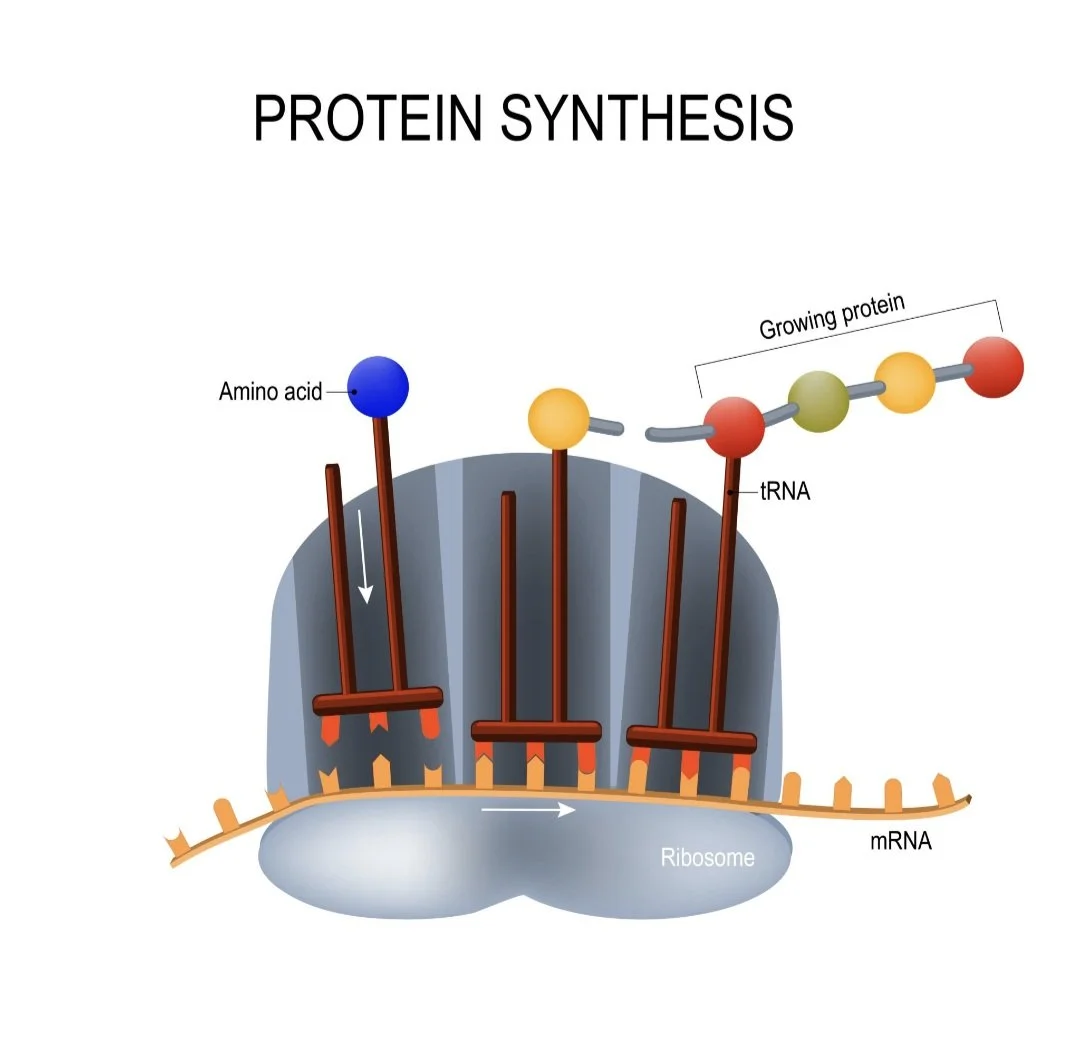
Your body uses a process called Muscle Protein Synthesis to repair the tiny "micro-tears" and stresses that happen during a deep massage or a workout. New research (using a high-tech method called IAAO) shows that our bodies need way more "building blocks" (protein) to finish these repairs than we used to think.
If you aren't eating enough protein, I can "smooth out" the muscle, but your body can’t actually rebuild it. It just stays weak and tight, waiting to snap back into a knot the moment you get stressed.
The Tool: The “1g per lb” Rule
Here is the simple tool that will make the results you get from our massage sessions last:
The 1g per lb rule.
This means for every pound of your ideal body weight, we will aim for 1 gram of protein in your daily meals. If your ideal body weight 150lbs, your goal is 150g of protein. When you have this "supply" of protein ready to go, your body can take the work I do on the table and actually lock it in. Your muscles become more like a strong, stretchy rubber band and less like a brittle, dry piece of jerky.
Honoring Your Life Stage
This "tool" becomes even more important during the biggest physical transitions of your life. I want you to feel strong and supported, not depleted.
Rigorous Athletic Training: When you are pushing your body to the limit—whether you're training for a race or lifting heavy—your recovery has to keep up with your effort. If you don't hit that 1 gram per lb goal, your muscles stay in a state of "perpetual soreness." This tool is the breakthrough that allows you to stop feeling "beat up" and start feeling "tuned up" after our sessions (Kreider & Campbell, 2009).
During Pregnancy: You aren’t just repairing your own muscles; you’re building a whole new person. While old advice was much lower, modern science now suggests that pregnant women should aim for 1g of protein per lb of body weight (pre-pregnancy weight) to keep their own muscles from becoming "robbed" of nutrients. This is what helps you avoid that deep, chronic pregnancy back pain.
Breastfeeding: This stage is incredibly demanding on your body, especially immediately after birth, when your energy demands can be as high as 800 calories higher than your baseline. To keep your milk supply high and your own neck and shoulders from feeling "locked up" while nursing, staying near that 1g per lb mark is your best defense against "nursing hunch" and fatigue.
The Breakthrough: A Body That Stays Relaxed
When you start using this protein tool, you’ll notice a massive shift. You won’t just feel "relaxed" for an hour after our session; you’ll feel resilient all week long.
You’ll find that:
Your "Knots" Stay Gone: Because your body actually had the "bricks" to fix the tissue, the work we do on the table finally sticks.
You Recover Faster: That tender, "post-massage" feeling disappears much quicker because your muscles have the nutrients they need to heal immediately.
You Feel Balanced: Your posture feels easier to hold and your body feels "held together" rather than fragile or stiff.
We’re moving past the point of just "getting through the week" with your pain. By combining our work on the table with the right fuel in your kitchen, we are finally giving your body the chance to heal the way it was meant to.
Take Your Health Into Your Own Hands
If you are tired of "chasing pain" and you’re ready to see what your body is actually capable of, I want to invite you to book a complimentary consultation.
This isn't about a temporary diet; it’s about giving you the tools to live more holistically. We will work together to hit your "1g per lb" goal using a plan specifically designed to support your muscles, your life stage, and your recovery. It’s time to stop waiting for the next appointment to feel better and start building a body that feels good every single day.
Are you ready to see real results? Let’s see if Nutritional Therapy is right for you so we can start this journey together.
References
Aussieker, T., et al. (2024). Protein blends and muscle connective tissue synthesis. Medicine & Science in Sports & Exercise.
Elango, R., & Ball, R. O. (2016). Protein and Amino Acid Requirements during Pregnancy. Advances in Nutrition.
Nichols, L. (2023). Real Food for Pregnancy.
Rasmussen, B., et al. (2020). Protein Requirements of Healthy Lactating Women. Current Developments in Nutrition.
