

Raised on Candy, Radicalized by Veganism, Healed by Real Food
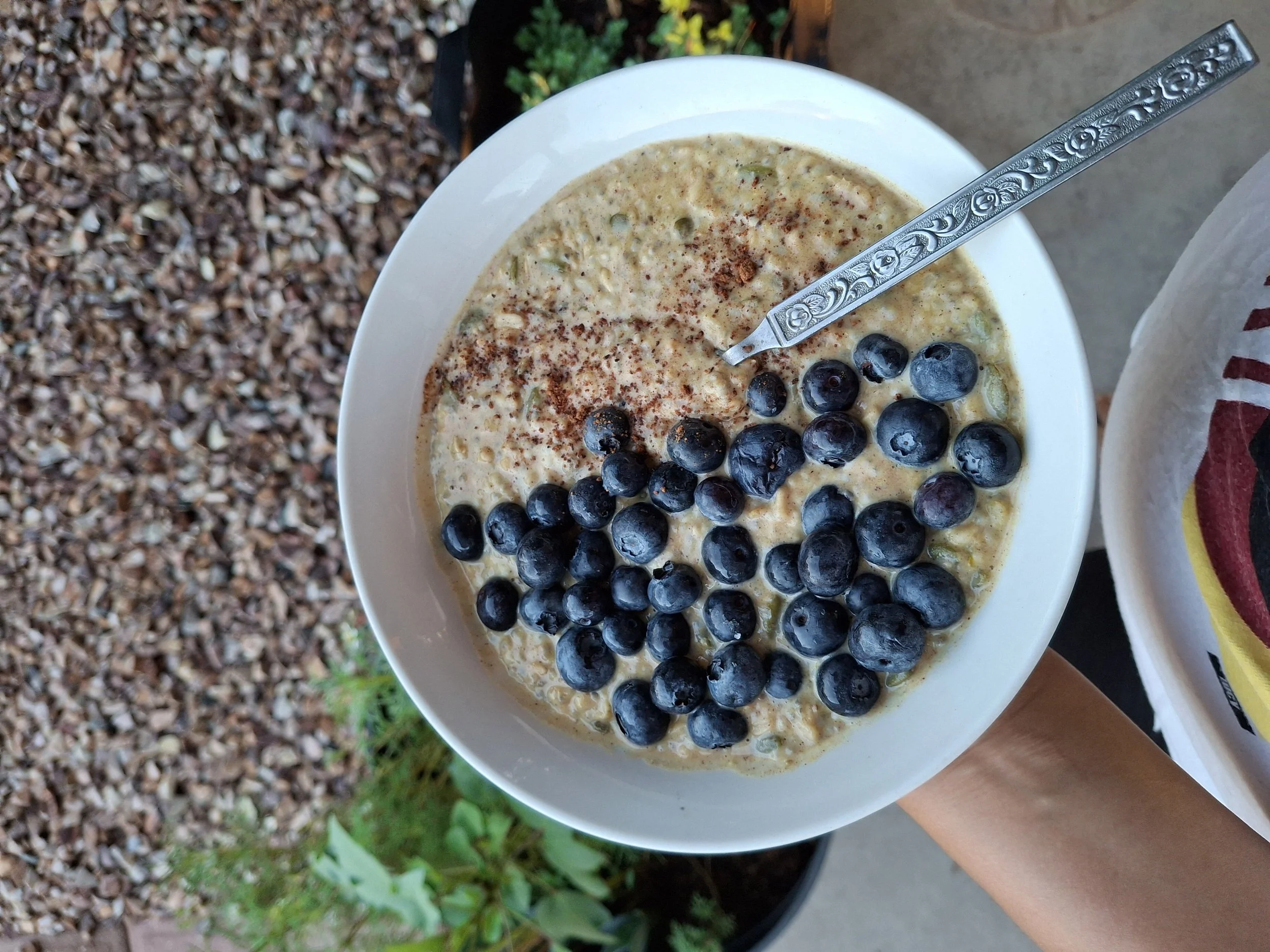
A nutritionist's unfiltered story of diet culture, addiction, breakdown, and discovering ancestral nutrition wisdom
If you had told my teenage self—standing behind the counter of my parents' candy store, mindlessly snacking on ultra-processed foods—that I'd one day become a nutritionist, I would have laughed in your face. But the journey from that candy-filled childhood to where I am today wasn't a straight line. It was a chaotic, painful, and ultimately transformative path through every dietary extreme you can imagine.
When Diet Culture Started: Age 10
I was only 10 or 11 years old when my mom and aunt decided I needed to slim down. Instead of teaching me the foundations of healthy eating or how to cook nourishing meals, they handed me slimming tea and a cookies-and-cream flavored meal replacement shake. The tea gave me massive diarrhea—which was apparently the point. Lose weight at any cost, even if it meant a child suffering digestive distress.
This was my first initiation into feeling uncomfortable in my own body. Not empowered. Not educated. Just uncomfortable. The message was clear: there was something wrong with me that needed to be fixed. This is what Mexican culture does—especially to young girls. Your body becomes a problem to solve rather than a vessel to nourish.
Growing Up in a Candy Store: When Processed Food Meant Success
My childhood was a sugar-coated dream—or nightmare, depending on how you look at it. My parents owned a candy store, which meant unlimited access to every ultra-processed treat you could imagine. Gummy bears for breakfast? Sure. Chocolate bars as an afternoon snack? Why not. This wasn't just occasional indulgence; it was my normal.
But here's the twisted part: in Mexican immigrant culture, selling candy and processed foods was a status symbol. It meant you had money. You were above the means of farming for your food. You had made it. Never mind that both my parents came from farming families. Never mind that my grandparents raised their own animals, grew their own food, prepared grains ancestrally.
I grew up in this dichotomized world. At my grandmother's house, I ate properly raised eggs and meat, ancestrally prepared grains, fruit picked fresh from her trees—oranges, lemons, guavas still warm from the sun. I watched her make tamales with nixtamalized corn the traditional way. Real food. Prepared with knowledge passed down through generations.
But at home? We traded all that wisdom for wheat flour tortillas because they were more palatable, more convenient, more 'American.' Our tongues were hijacked. Our ancestral knowledge was overruled by greed and the promise of an easier life. My parents came to America for better financial opportunities, and in many ways, they achieved that. I got a formal education. I had career opportunities they never dreamed of. But our family also became enslaved to the modern money system, to convenience culture, to processed food as a marker of success.
That's a topic for another day. But it set the stage for everything that followed.
The First Rebellion: Pescatarian by Peer Pressure
High school brought my first dietary identity shift. I became pescatarian—not because of any deep ethical conviction or health awakening, but because it made me feel like I belonged. My friends were doing it. It was trendy. It was different. And honestly? It was rebellion against my candy store upbringing disguised as a health-conscious choice.
The irony wasn't lost on me years later: I'd swapped one form of conformity (ultra-processed junk) for another (following whatever my peer group deemed acceptable). I wasn't thinking for myself. I was just trading one set of food rules for another, still completely disconnected from what my body actually needed.
Vegetarianism: When Ethics Entered the Picture
Eventually, I progressed to full vegetarianism, and this time it felt different. I genuinely cared about animal welfare. I watched the documentaries, read the books, and believed I was making a moral choice. For the first time, my diet felt connected to something bigger than myself.
But there was still something missing. I was eating 'ethically,' but I was still eating plenty of processed vegetarian junk food. My body still wasn't getting what it needed. I just didn't know it yet.
The Vegan Spiral: Health Promises and Social Contagion
Then came veganism. This is where things got really intense.
I dove headfirst into the vegan world, convinced it was the ultimate health optimization. The documentaries promised disease reversal, boundless energy, glowing skin, mental clarity—everything. The online communities were incredibly supportive... until they weren't. Until you questioned anything. Until your body started showing signs of deficiency.
What I didn't realize at the time was that I'd fallen into a pattern eerily similar to eating disorder culture. The orthorexia. The rigid rules. The moral superiority attached to food choices. The way we policed each other's plates. The social media echo chambers reinforcing increasingly extreme positions. It was online social contagion, and I was completely caught in it.
The vegan influencers I followed preached perfection. Any health issue? You weren't doing it right. Feeling tired? You needed more raw foods. Period problems? More fruit. It was always more restriction, never the possibility that maybe—just maybe—the diet itself was the problem.
The Breakdown: When My Body Said 'Enough'
Eventually, my body started screaming.
Chronic headaches that wouldn't quit. Debilitating period pain that had me curled up in bed for days. Anxiety through the roof. Brain fog so thick I could barely function. Constant fatigue despite sleeping 10 hours a night. My hair was falling out. My skin looked gray. I was falling apart, but the vegan community told me I just needed to 'trust the process' and 'detox harder.'
The stress became unbearable. I was trying so hard to be 'perfect,' to follow all the rules, to be the ethical, healthy person I thought I should be. But perfection was killing me.
Letting Go: The Hardest and Most Healing Thing I've Ever Done
Rock bottom forced me to do something radical: let go.
I released all the food rules. All the guilt. All the shame. I stopped labeling foods as 'good' or 'bad.' I started listening to my body instead of Instagram influencers. I began eating intuitively, without restriction, without moral judgment.
This wasn't easy. The guilt was overwhelming at first. I felt like I was betraying my values, my identity, everything I'd built my self-worth on. But my body? My body started to heal.
Dairy and Divinity: A Spiritual Turn
Through connections with spiritual communities—particularly influenced by Hindu and Buddhist practices—I began incorporating high-quality, humanely sourced dairy products. This felt sacred, not indulgent. These traditions had honored dairy as a healing food for thousands of years. There was wisdom there that our modern, Western diet culture had completely dismissed.
Ghee. Real yogurt. Grass-fed milk used in ceremony and cooking. These weren't just foods; they were medicine. They were connection. They were tradition. And they made me feel better than I had in years.
Massage School: Where Healing Became Real
I enrolled in massage school, seeking to understand the body from a different angle. And that's where everything clicked.
The chronic headaches that had plagued me for years? Gone. The period pain that had been part of my monthly routine? Dramatically reduced. I was learning about the body as a whole system, not just isolated symptoms to suppress. I was learning that healing isn't about restriction—it's about nourishment.
But I also started to see the connection between what I ate and how I felt. When I tracked my symptoms against my diet, patterns emerged. The more nutrient-dense animal foods I included, the better I felt. The more I relied on plant-based processed foods, the worse my symptoms became.
Breaking the Marijuana Habit: Another Form of Escape
Throughout this journey, I'd also been using marijuana regularly. It started as occasional rebellion, became habitual, and eventually turned into another way to avoid dealing with what my body was telling me. It was counter-culture cool, socially acceptable in my circles, and honestly? It numbed the discomfort of not feeling well.
Quitting wasn't easy, but it was necessary. I needed to be clear-headed. I needed to actually feel what my body was experiencing, not just dull it with substances. This was part of the bigger pattern: stop escaping, start healing.
Becoming a Nutritionist: Learning What I Wish I'd Known
All of this led me to pursue comprehensive nutrition education. I needed to understand, formally and scientifically, what had happened to me and why.
One of the most shocking revelations? There are no traditional vegan cultures on Earth. None. Zero.
Every traditional culture that has thrived for generations includes animal foods. Many cultures specifically prize certain animal foods for preconception, pregnancy, and postpartum healing. Organ meats. Bone broth. Fish eggs. Full-fat dairy. These weren't just foods—they were sacred nourishment for the most important phases of life.
The vegan diet, as we know it today, is a modern experiment. And for many people—especially women of reproductive age—it's an experiment that fails.
Preparing for Pregnancy: Nourishment as Medicine
As I prepared my body for pregnancy, everything I'd learned crystallized. This wasn't about ideology anymore. This was about giving my future child the absolute best start possible.
I learned about the crucial nutrients found almost exclusively in animal foods: vitamin A (the real, bioavailable form), vitamin B12, choline, DHA, iron, zinc, vitamin K2. I learned about the Weston A. Price Foundation's research on traditional preconception diets. I learned that ancestral wisdom and modern science actually agree on far more than the vegan propaganda machine wants to admit.
I incorporated liver, eggs from pasture-raised chickens, wild-caught fish, bone broth, and grass-fed dairy. My body transformed. My energy returned. My cycles regulated. The brain fog lifted. I felt like myself again—maybe for the first time ever.
Coming Full Circle: What My Grandmother Knew All Along
The most profound irony of my entire journey? My grandmother had the answers all along.
She raised her own chickens and ate their eggs. She prepared corn the ancestral way through nixtamalization, unlocking nutrients that modern processing destroys. She picked fruit fresh from trees she'd planted and tended. She knew which foods built strong bodies and healthy babies because that knowledge had been passed down for generations.
I had to travel through slimming teas at age 10, pescatarianism, vegetarianism, militant veganism, health collapse, and formal nutrition education to come back to what she'd been doing quietly all along. We traded real wisdom for processed convenience and called it progress.
What I Want You to Know
If you're struggling with extreme diet culture, whether it's veganism, raw food, or any other restrictive way of eating that's making you feel worse instead of better—please know you're not alone. And please know that letting go isn't failure. It's wisdom.
Your body knows what it needs. But diet culture—especially online diet culture—has become so loud, so persuasive, so morally charged that it drowns out your body's signals. We've confused restriction with virtue, suffering with discipline, and dogma with health.
Real nutrition isn't about following the latest trend or proving your moral superiority. It's about nourishment. It's about honoring the wisdom of cultures that sustained healthy populations for generations. It's about bioavailable nutrients, not ideology.
My journey from candy store kid to nutritionist taught me this: healing happens when you release the rules and return to real food. When you stop fighting your body and start listening to it. When you choose nourishment over dogma, every single time.
And sometimes, the most radical thing you can do is return to what your grandmother knew all along.
That's my story. Messy, imperfect, and real. And if it helps even one person question the diet culture that's hurting them, it was worth sharing.
